A SHROUD IS A CLOTH. A shroud obscures, but it also protects what is underneath. A shroud cradles that which it covers at a time of transition, a transmutation from one state to another. Above all, a shroud is indexical: it says that something once came from the land, was severed from it, and will now be returned to the land. The human that is made of clay and mud returns to clay and mud; ashes to ashes, dust to dust.
A textile is in itself an expression of the landscape it comes from. It has a terroir that is reflected in its texture: the diameter of each strand and its crimp, which in turn affects its softness or coarseness and insulating properties. Among animal fibres, wool is especially remarkable for its ability to absorb moisture without getting wet; put another way, it is uniquely able to not just reflect its terroir, but carry its atmosphere with it. And while we tend to think of terroir as climate, soil composition, and the particular grasses that an animal might eat, we should extend our understanding to other elements, namely the accumulation of culture and history that is as much a part of any terrain as its mineral content.
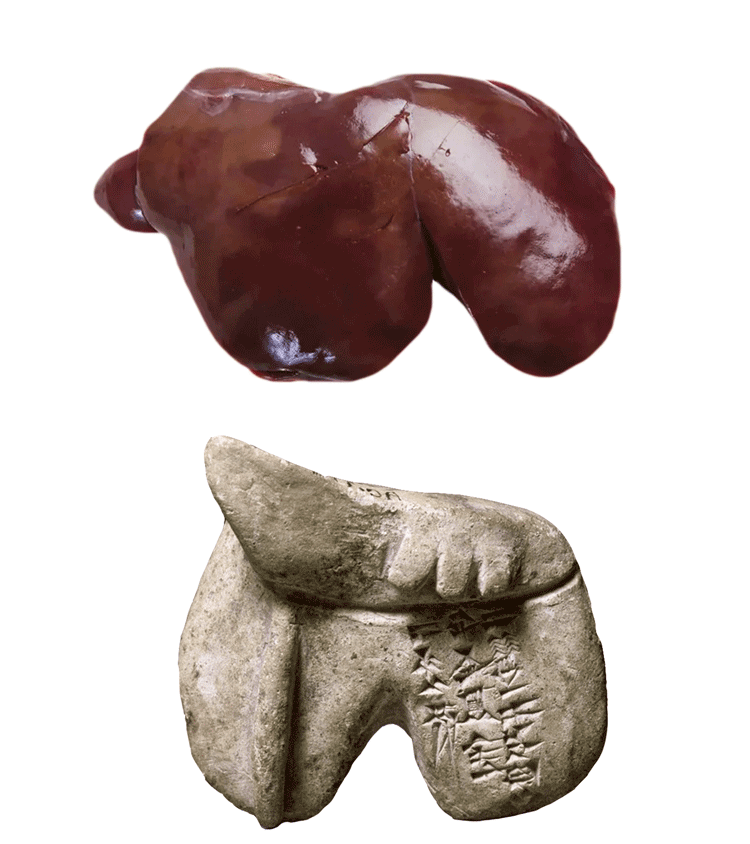
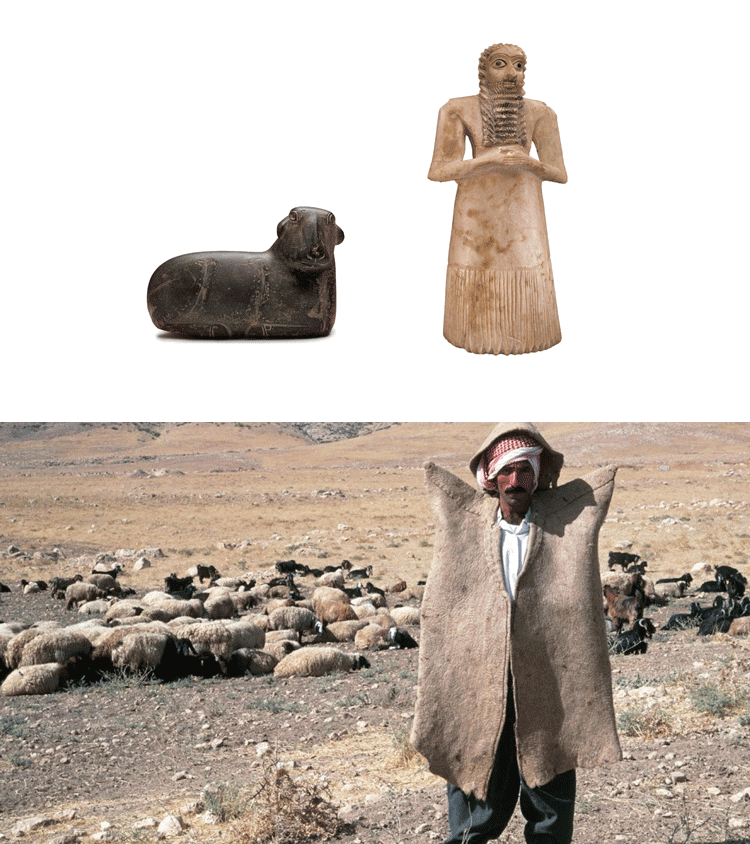
As the animal grazes, its hair, fur, or wool also accumulates its surrounding landscape, picking up burrs which have co-evolved to have a commensalistic relationship with the animal that carries and deposits these seeds elsewhere, ensuring biodiversity. Humans, in turn, have manipulated these animal fibres as clothing and as shelter, resulting in morphological changes over time as the body evolves to adapt to new climates. In his textile-based practice, Adrian Pepe primarily works with wool from Awassi sheep, an ancient fat-tailed breed that has been reared in its native Mesopotamia and Levant for over 5000 years. It is the ur-sheep of Abrahamic religions and ritualistic practices, slaughtered to celebrate births or honour guests, and sacrificed on holy days and holidays, with their livers used for divination. As such, its wool grows from a symbolically fertile ground, laden with the weight of mythology, civilisational history, and creationist narratives.
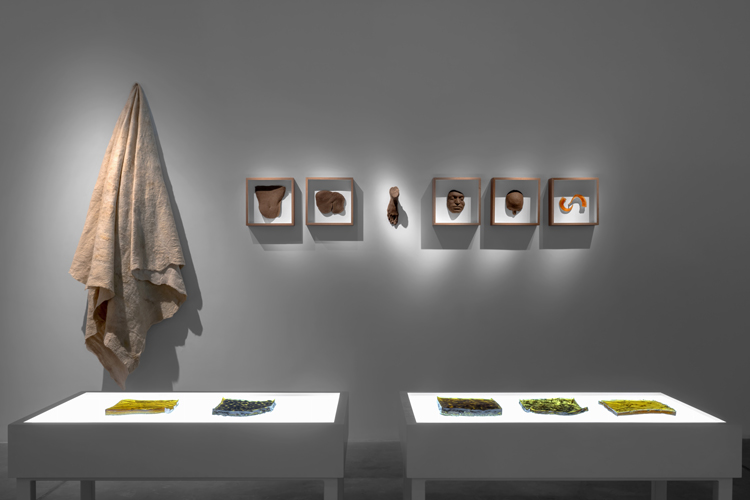
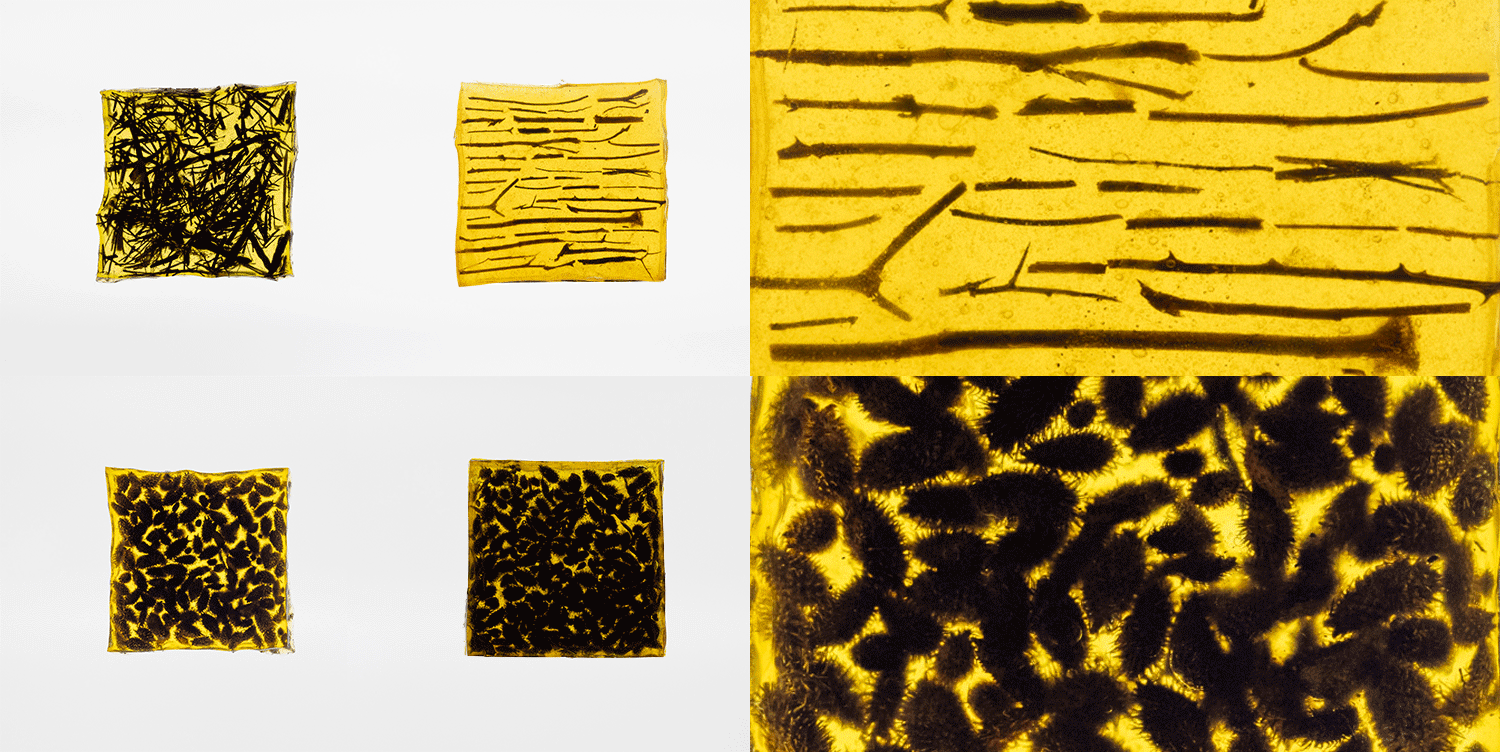
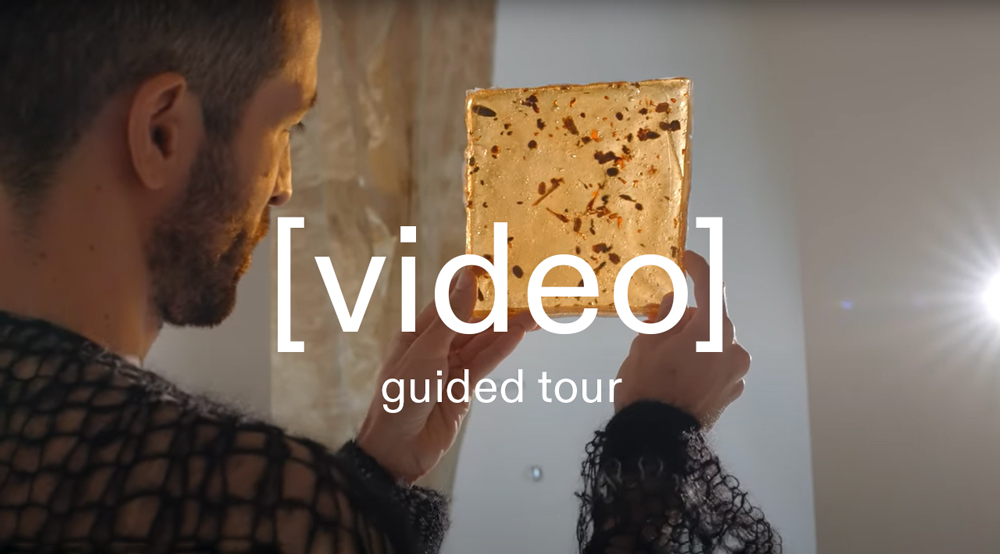
Drawing parallels to the Mayan notion of the world existing on the back of a turtle, Pepe’s work is grounded in the recognition that a whole ecosystem exists on the backs of animals too. He describes the process of turning a fleece—a shorn biomass of wool, parasites, insects and plant matter—into material, hair into wool, as an extractive process of removing the landscape from it. More recently, he has begun to separate out and classify these elements to create a kind of visual taxonomy of the wool’s terroir. Using animal collagen and medical grade preservatives, these bits of landscape are tightly bound together into matted expressions of a territory LANDSCAPE MATTER that are hung on the gallery wall, or looser, fossilised amberlike tiles VEGETABLE MATTER that are displayed on x-ray lightboxes, suggesting a primordial soup of plant matter floating in animal matter. Also on view is a video from the cataloguing process, which navigates the debris using a powerful microscopic lens, moving ever downward to produce a visceral, endoscopic exploration.Taken together, they create a certain forensic aesthetic—the modern-day organ divination—but what is being dissected here is not human flesh so much as the landscape itself.
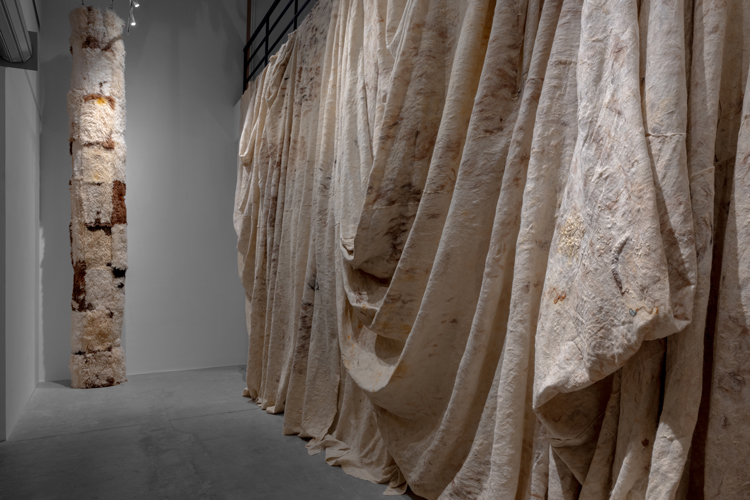
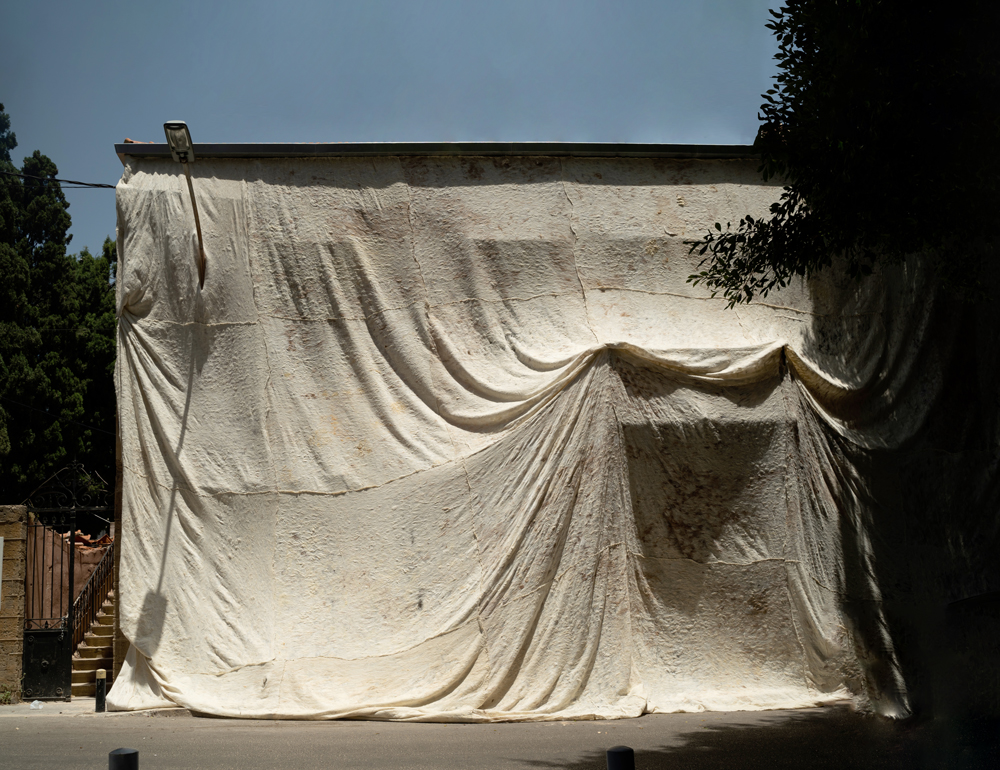
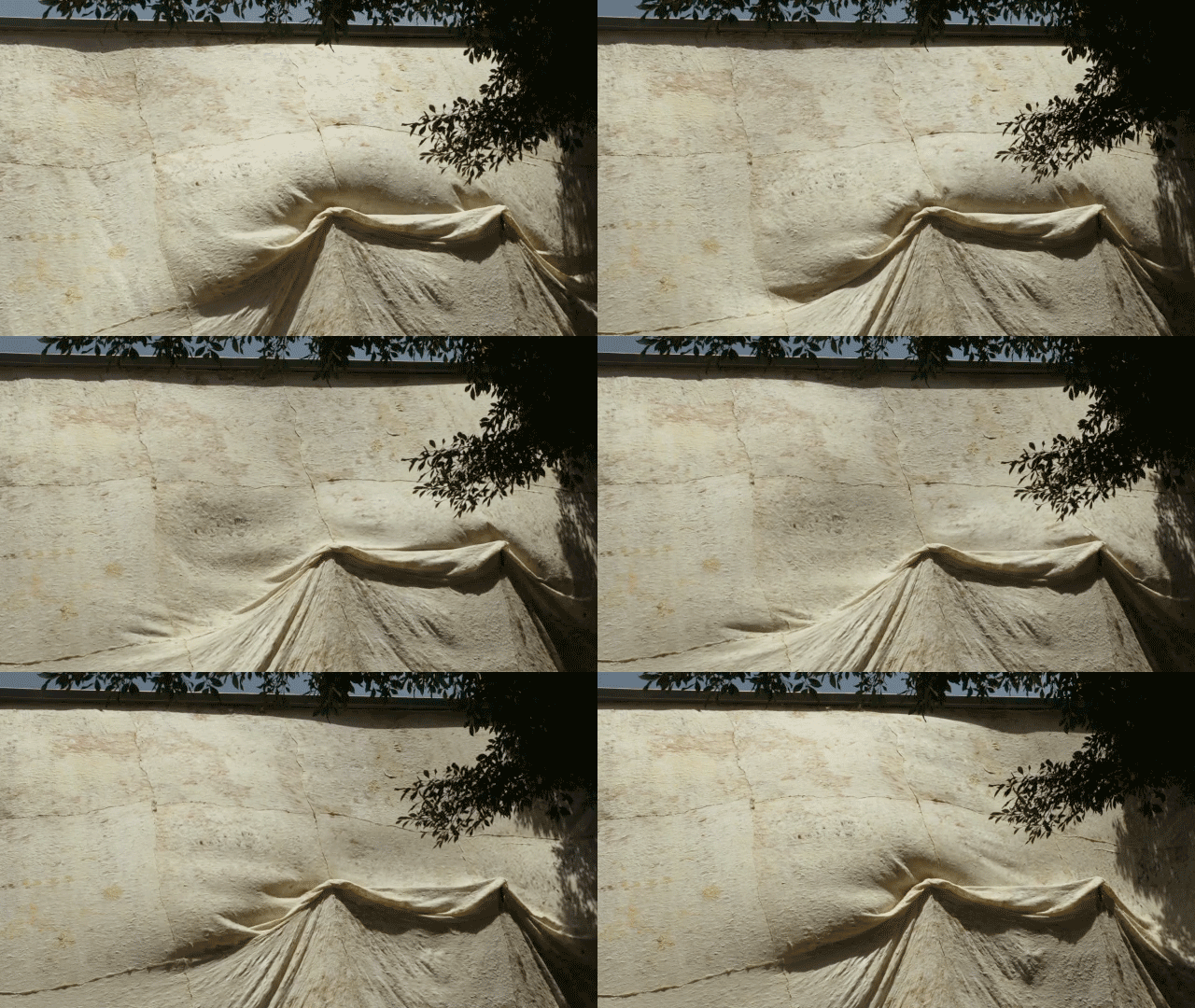
In summer 2024, Pepe wrapped the Villa des Palmes, a heritage building severely damaged in the Beirut port explosion, in handmade felted wool. Unlike the hermetic seal of a coffin, a shroud is a semi-permeable membrane that allows for the passage of air, moisture, microbes, and the forces of time and here, too, the covering is stretched thin like yuba. In using a material long used to dress wounds, the intervention drew parallels between urban and fleshy bodies, and their different processes of treatment and repair. When we heal a broken structure, we try to restore it to a state of former glory. When we renovate the human body, however, the most we can do is stem the tide of decay. Draped over a building, this single, multi-panelled textile operates like the green or brown safety mesh over scaffolding we might be more used to seeing but unlike the fixity of this netting, the shroud billows and sighs in the breeze, revealing the fragility and vulnerability of the decimated form it covers.
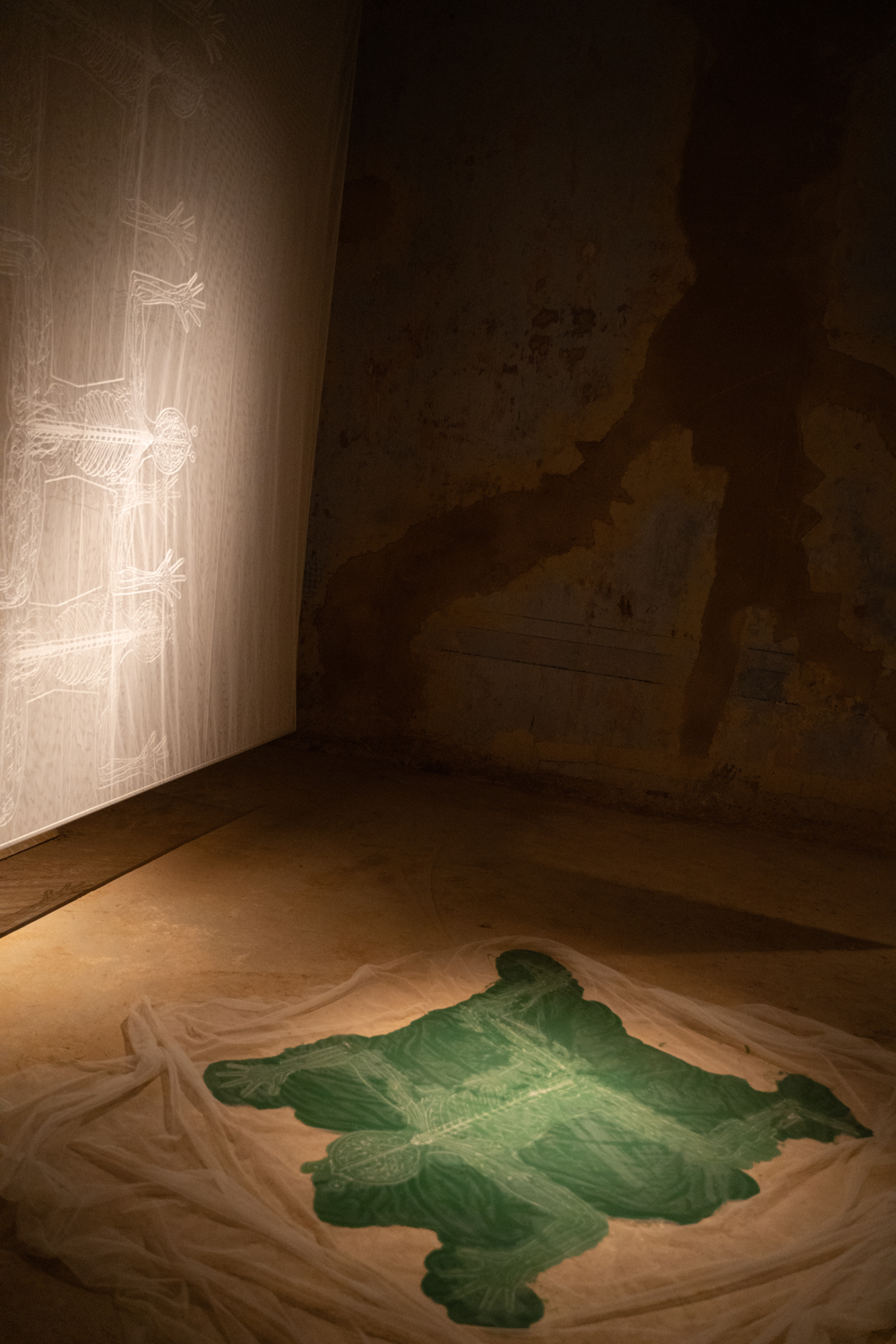
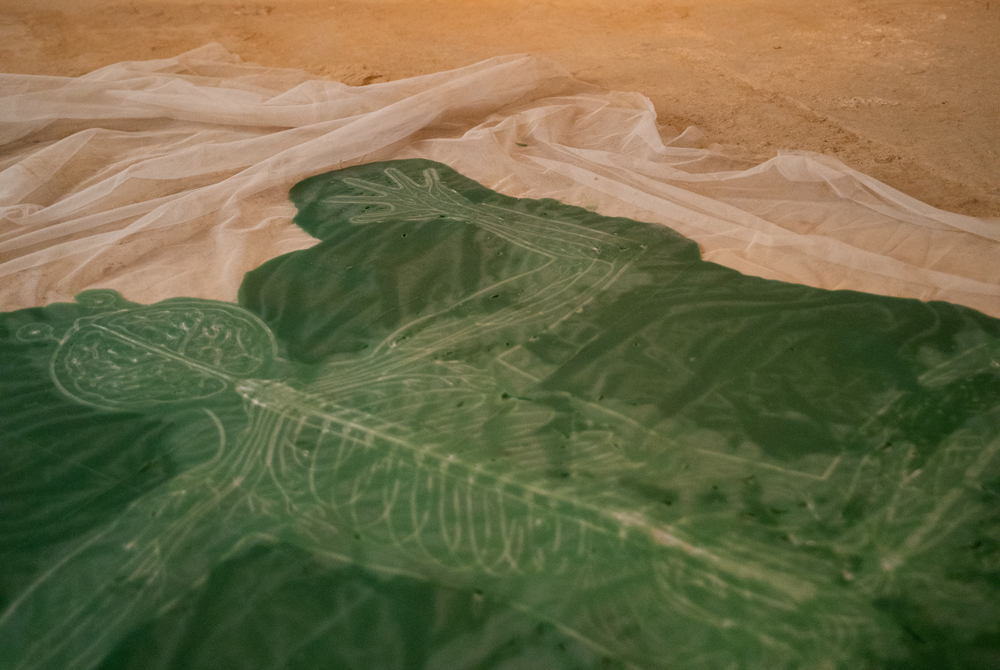
At Nika, this monumental 200 square meter textile is hung in the anterior space, greeting visitors as they enter the space to form the heart of the show. Removed from the building-as-corpse, it invokes the living bodies that it once originated from, with each panel using approximately the amount of wool produced by a single sheep. Yet installed in a white cube, the shroud doesn’t suggest a return to the earth, to the landscape, so much as the cold clinicality of the mortuary. Moving from the shroud towards the shroud,main space then, creates an unsettling play on scale as the visitor moves from product to representations of the landscape it is extracted from.
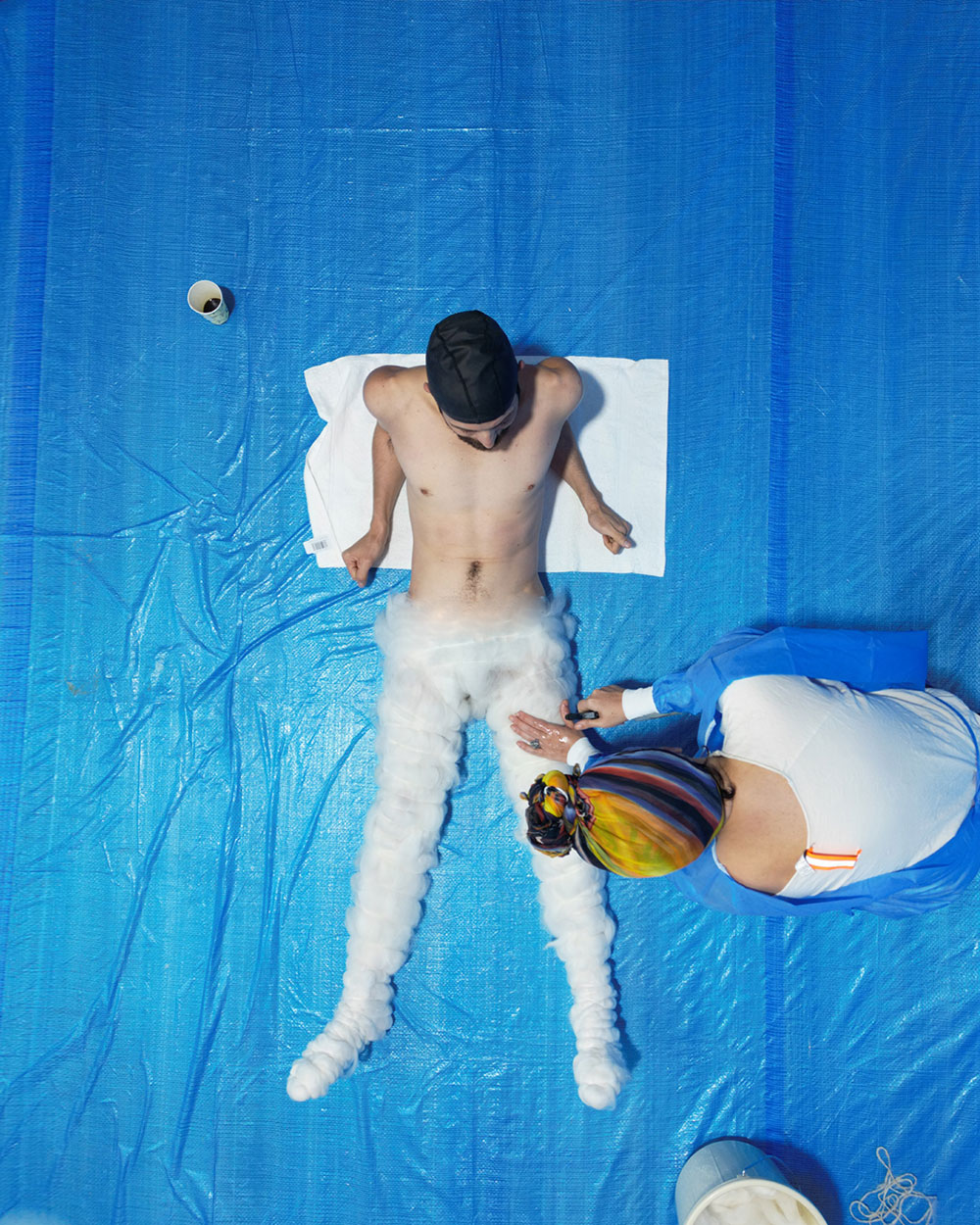
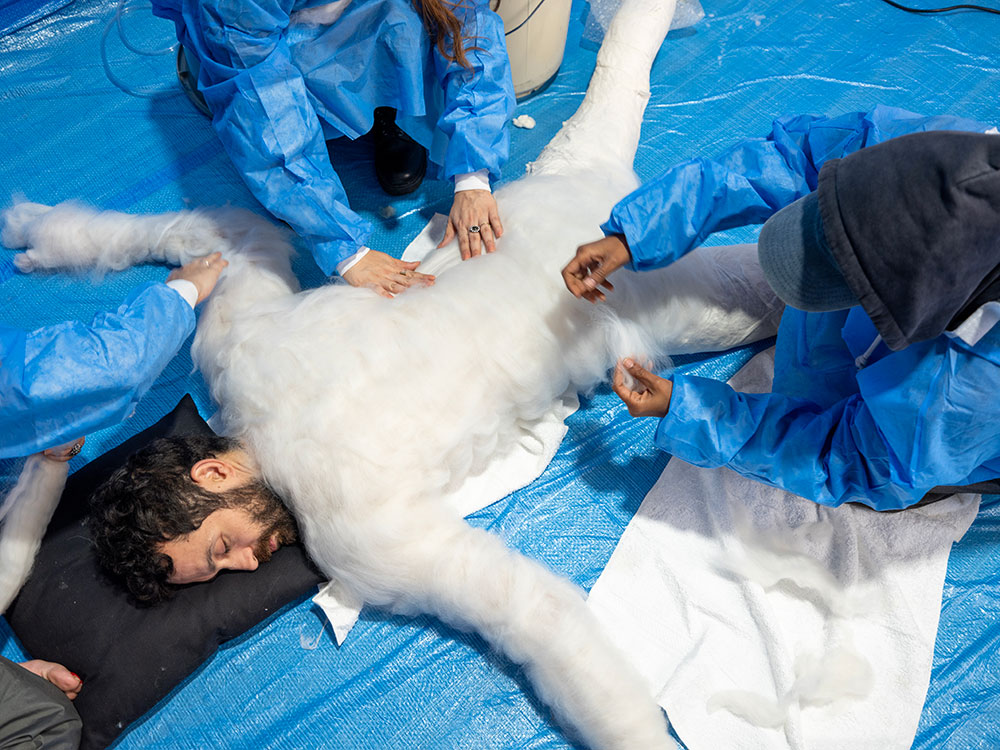
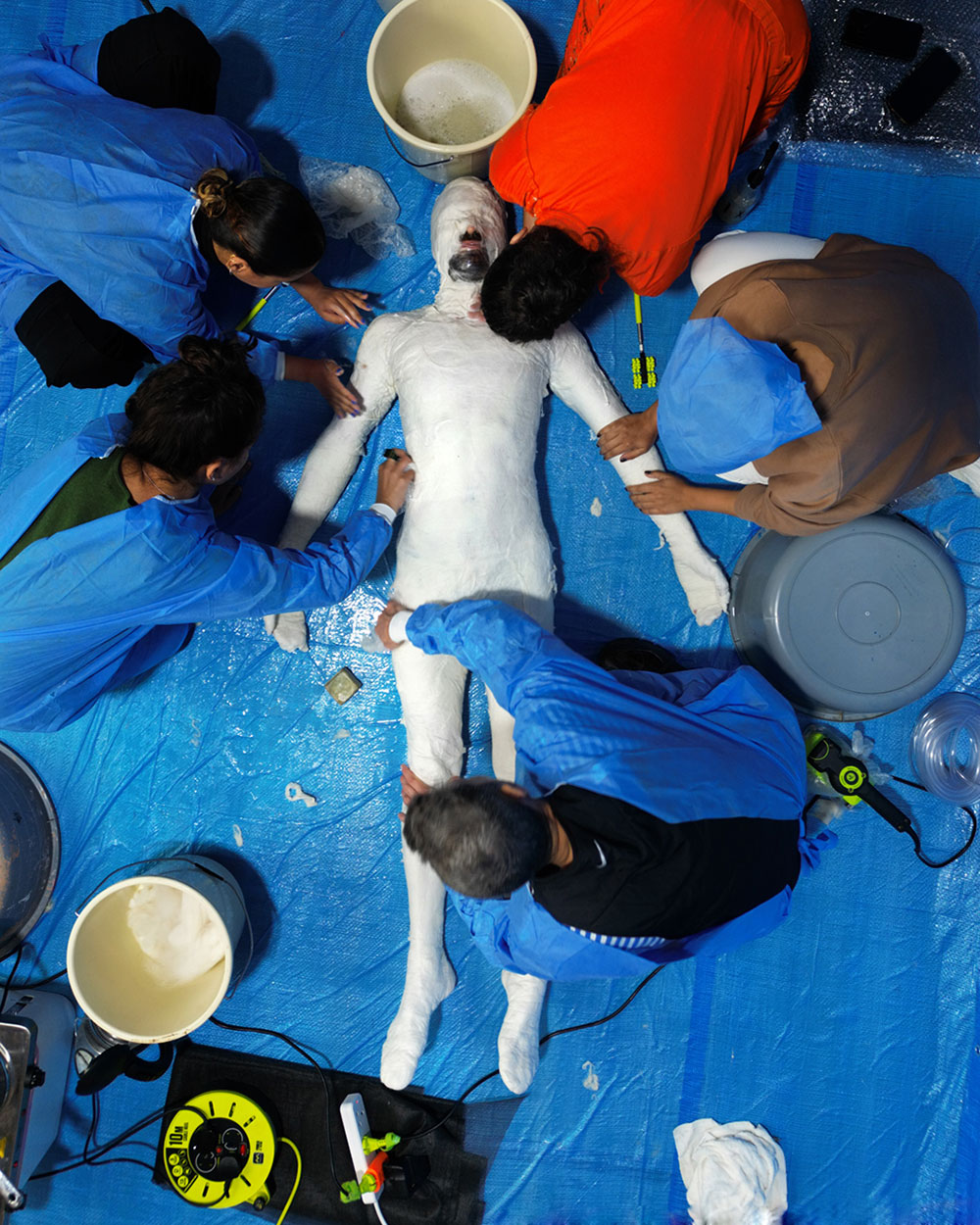
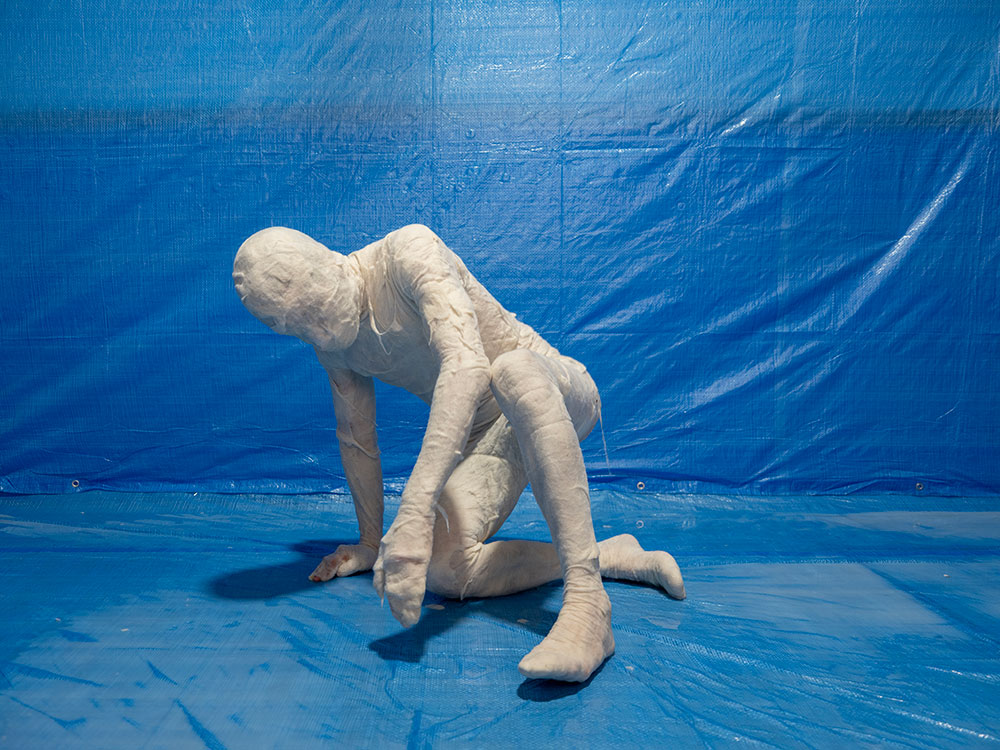
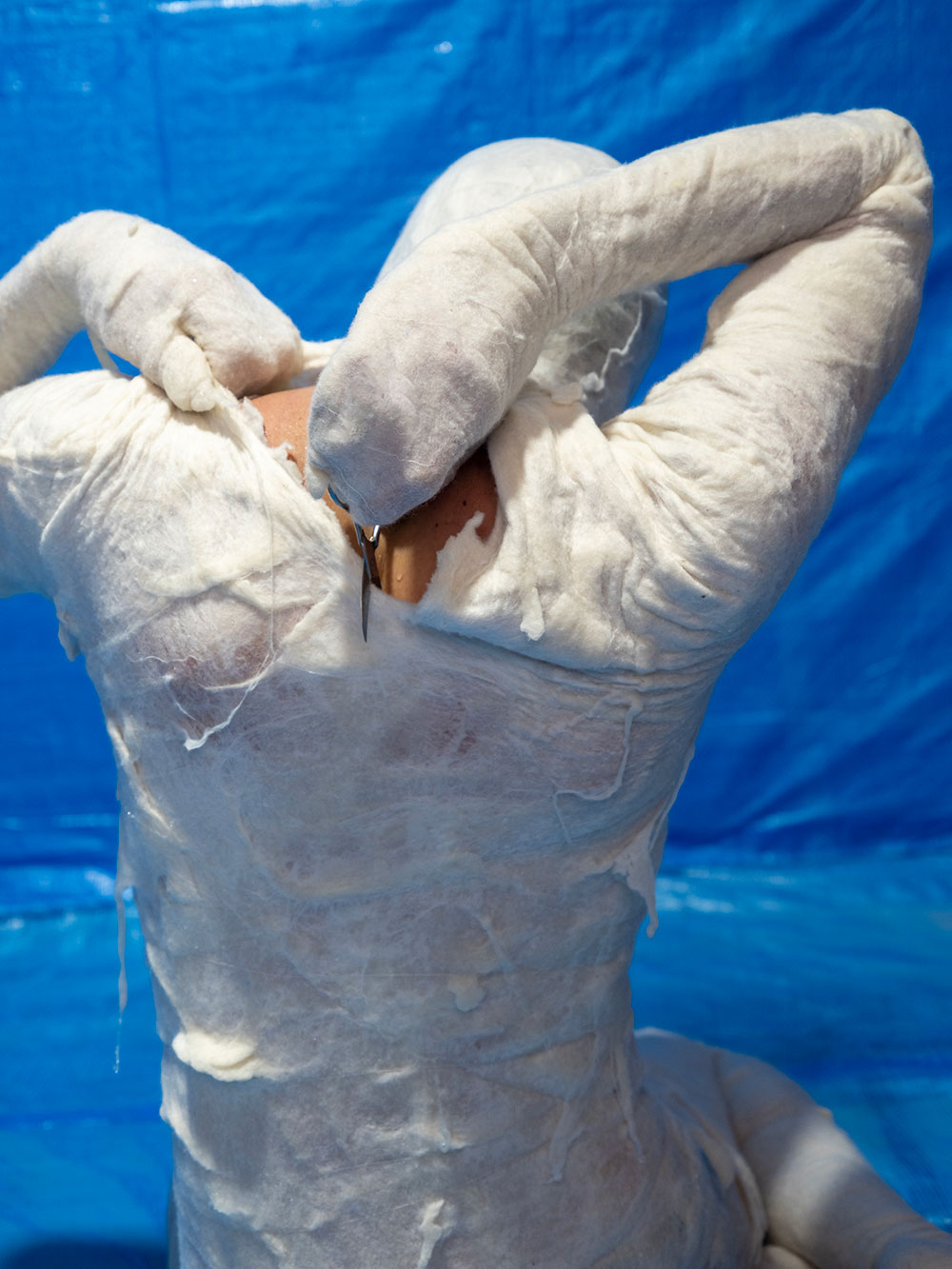
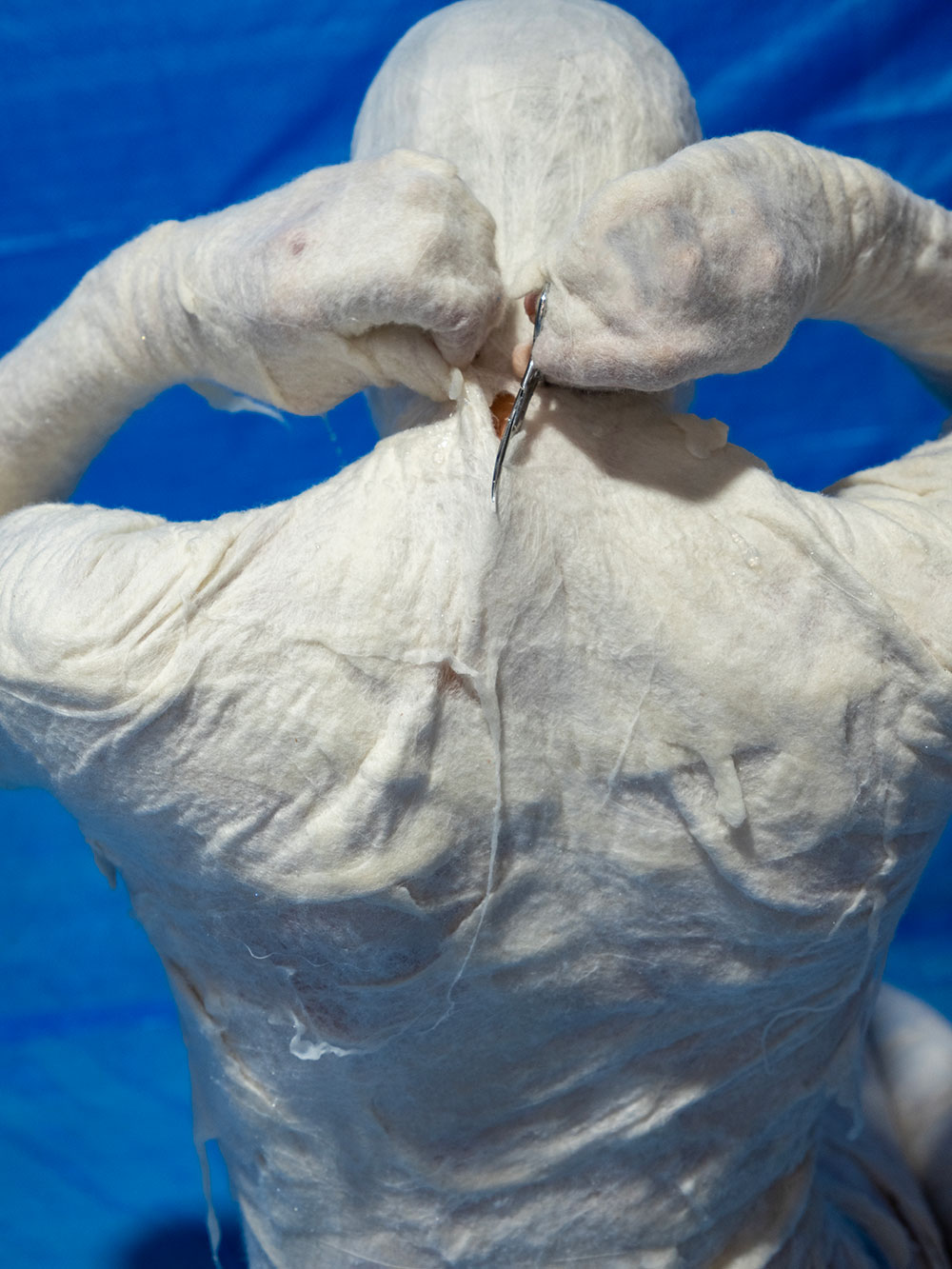
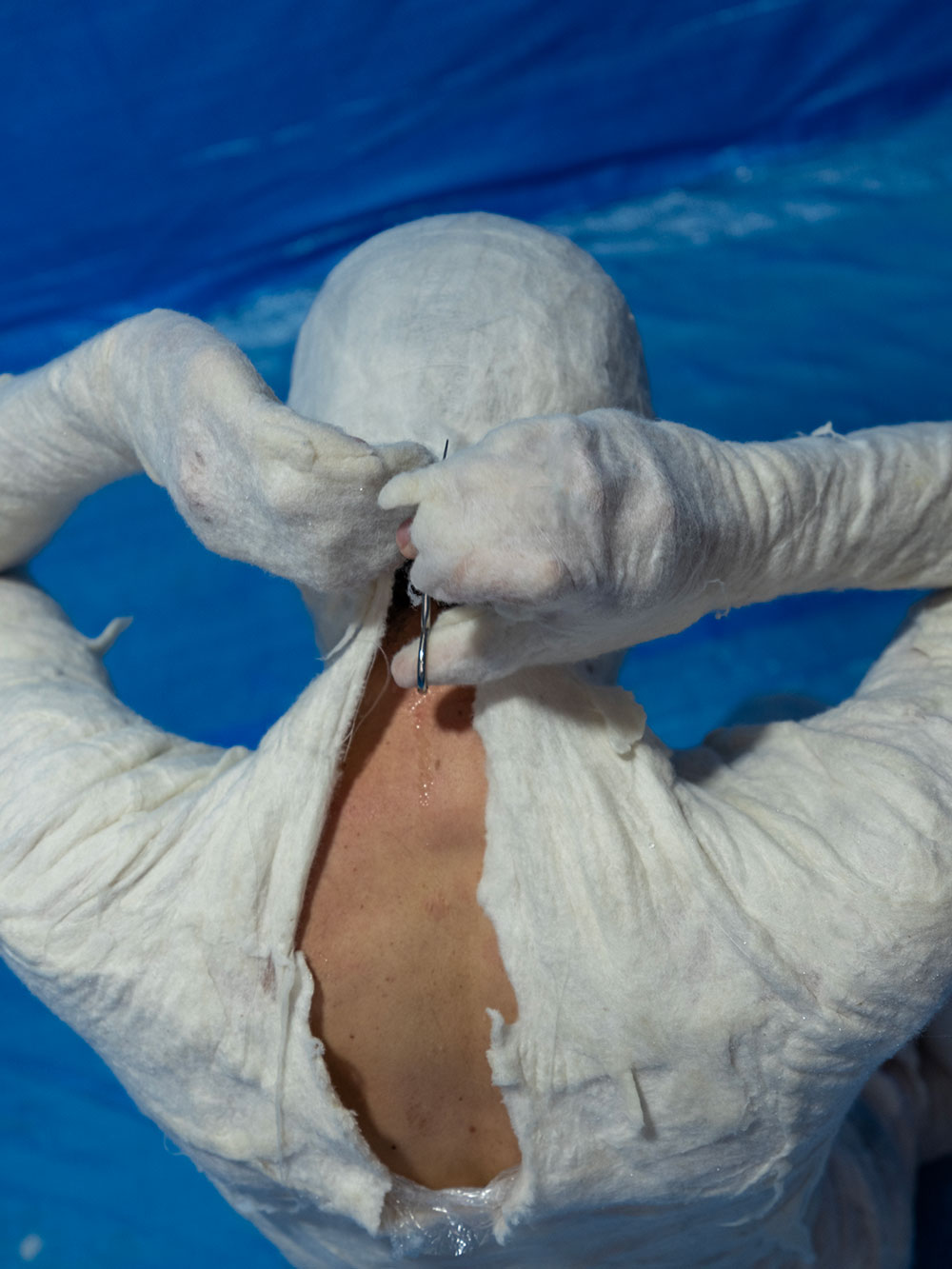
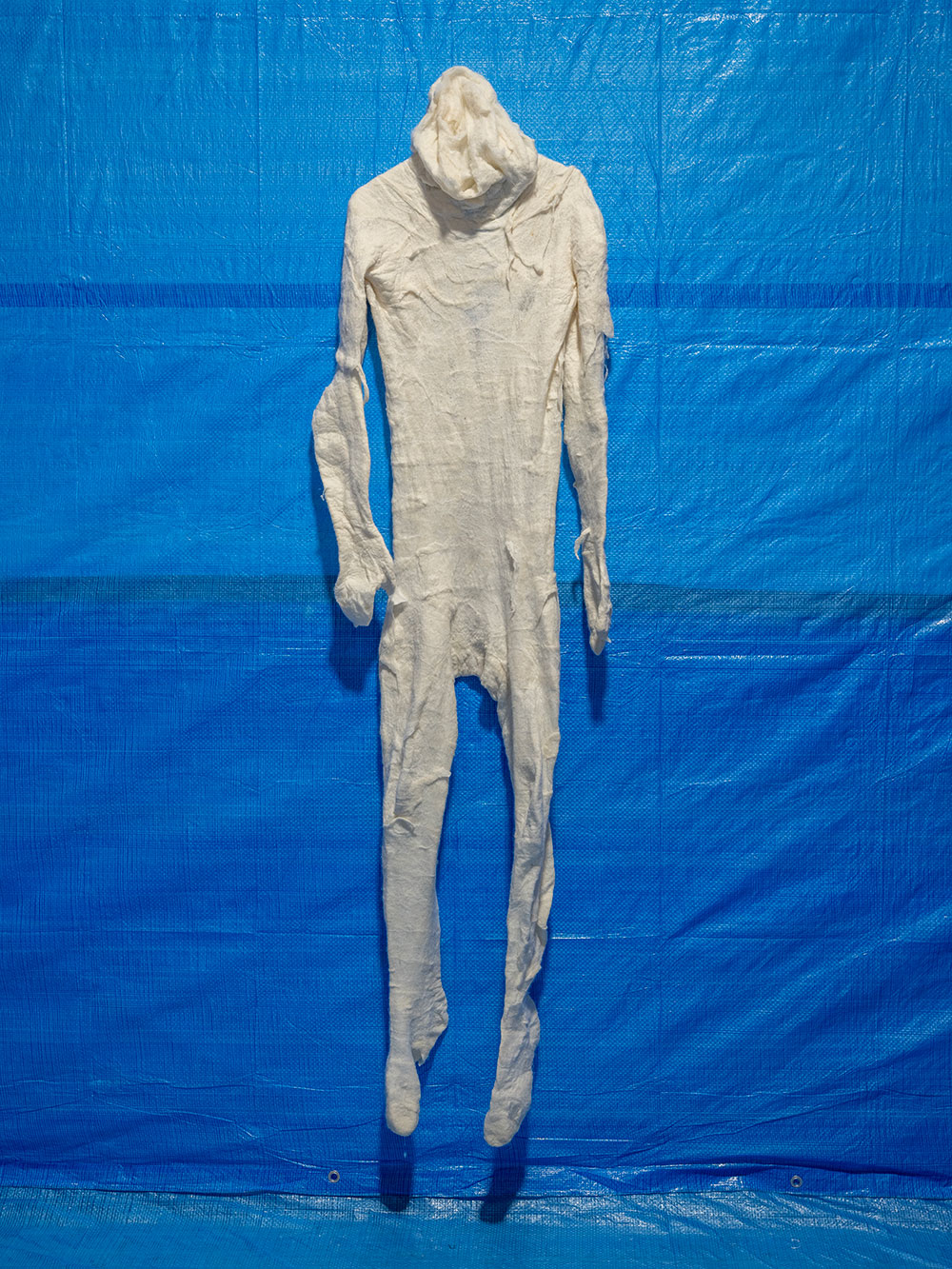
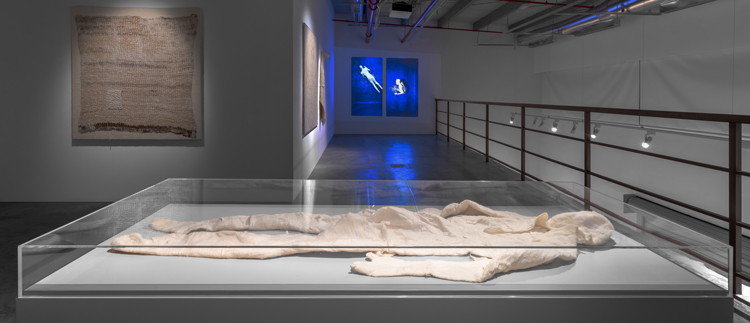
As for the absent body that the shroud intimates? It has already made its way upstairs, in the form of Shedding (2023), a life sized cast of the artist’s body, laid out on a morguelike slab. The piece is the aftermath—an afterbirth as well as an shroud—of a 12-hour durational performance in which performers clad in disposable blue hazmat suits wet and felted wool directly onto Pepe’s body in an exploration of funerary rites and a millenia-long history ovine-human symbiosis. This shedded snakeskin analogue reverberates across floors in the jute netting that used to sag and fall off a building in Pepe’s Beirut neighbourhood like scabs. They are sutured together with felted wool in a series of works URBAN SHROUDS that further collapses the distance between shroud and safety textiles, and between the urban and human bodies.
The transformative process of healing is further viscerally intimated in works EX VOTOS that references childhood memories of Pepe’s father’s orthopedic clinic, as well as a Costa Rican pilgrimage tradition. Both are ritualised sites of profound faith and a very human yearning for repair, whether in the sympathetic magic of a basilica Chamber of Miracles, or the performed rationality of modern medicine. At the end of the pilgrimage, devotees make small golden and silver medallions depicting ailing body parts which are hung on a particular wall as a way to ask for improved health or another boon, or mounted in gratitude for healing, or another benediction received. But here, human body parts are interspersed with animal ones, suggesting a kind of hybrid interspecies structuring.nThere is an understanding here that healing must necessarily be collective—we can’t get better alone—but also, fascinatingly, might require the built environment too. As a whole, the show suggests the locavorist maxim that what grows together grows together. The “three sisters” of corn, beans, and squash, for example, or tomatoes, eggplants and zucchinis. Or more precisely, what grows together should be shown together: shrouded, shed, and finally stitched together.
Text by Rahel Aima
A textile is in itself an expression of the landscape it comes from. It has a terroir that is reflected in its texture: the diameter of each strand and its crimp, which in turn affects its softness or coarseness and insulating properties. Among animal fibres, wool is especially remarkable for its ability to absorb moisture without getting wet; put another way, it is uniquely able to not just reflect its terroir, but carry its atmosphere with it. And while we tend to think of terroir as climate, soil composition, and the particular grasses that an animal might eat, we should extend our understanding to other elements, namely the accumulation of culture and history that is as much a part of any terrain as its mineral content.
As the animal grazes, its hair, fur, or wool also accumulates its surrounding landscape, picking up burrs which have co-evolved to have a commensalistic relationship with the animal that carries and deposits these seeds elsewhere, ensuring biodiversity. Humans, in turn, have manipulated these animal fibres as clothing and as shelter, resulting in morphological changes over time as the body evolves to adapt to new climates. In his textile-based practice, Adrian Pepe primarily works with wool from Awassi sheep, an ancient fat-tailed breed that has been reared in its native Mesopotamia and Levant for over 5000 years. It is the ur-sheep of Abrahamic religions and ritualistic practices, slaughtered to celebrate births or honour guests, and sacrificed on holy days and holidays, with their livers used for divination. As such, its wool grows from a symbolically fertile ground, laden with the weight of mythology, civilisational history, and creationist narratives.
Drawing parallels to the Mayan notion of the world existing on the back of a turtle, Pepe’s work is grounded in the recognition that a whole ecosystem exists on the backs of animals too. He describes the process of turning a fleece—a shorn biomass of wool, parasites, insects and plant matter—into material, hair into wool, as an extractive process of removing the landscape from it. More recently, he has begun to separate out and classify these elements to create a kind of visual taxonomy of the wool’s terroir. Using animal collagen and medical grade preservatives, these bits of landscape are tightly bound together into matted expressions of a territory LANDSCAPE MATTER that are hung on the gallery wall, or looser, fossilised amberlike tiles VEGETABLE MATTER that are displayed on x-ray lightboxes, suggesting a primordial soup of plant matter floating in animal matter. Also on view is a video from the cataloguing process, which navigates the debris using a powerful microscopic lens, moving ever downward to produce a visceral, endoscopic exploration.Taken together, they create a certain forensic aesthetic—the modern-day organ divination—but what is being dissected here is not human flesh so much as the landscape itself.
In summer 2024, Pepe wrapped the Villa des Palmes, a heritage building severely damaged in the Beirut port explosion, in handmade felted wool. Unlike the hermetic seal of a coffin, a shroud is a semi-permeable membrane that allows for the passage of air, moisture, microbes, and the forces of time and here, too, the covering is stretched thin like yuba. In using a material long used to dress wounds, the intervention drew parallels between urban and fleshy bodies, and their different processes of treatment and repair. When we heal a broken structure, we try to restore it to a state of former glory. When we renovate the human body, however, the most we can do is stem the tide of decay. Draped over a building, this single, multi-panelled textile operates like the green or brown safety mesh over scaffolding we might be more used to seeing but unlike the fixity of this netting, the shroud billows and sighs in the breeze, revealing the fragility and vulnerability of the decimated form it covers.
At Nika, this monumental 200 square meter textile is hung in the anterior space, greeting visitors as they enter the space to form the heart of the show. Removed from the building-as-corpse, it invokes the living bodies that it once originated from, with each panel using approximately the amount of wool produced by a single sheep. Yet installed in a white cube, the shroud doesn’t suggest a return to the earth, to the landscape, so much as the cold clinicality of the mortuary. Moving from the shroud towards the shroud,main space then, creates an unsettling play on scale as the visitor moves from product to representations of the landscape it is extracted from.
As for the absent body that the shroud intimates? It has already made its way upstairs, in the form of Shedding (2023), a life sized cast of the artist’s body, laid out on a morguelike slab. The piece is the aftermath—an afterbirth as well as an shroud—of a 12-hour durational performance in which performers clad in disposable blue hazmat suits wet and felted wool directly onto Pepe’s body in an exploration of funerary rites and a millenia-long history ovine-human symbiosis. This shedded snakeskin analogue reverberates across floors in the jute netting that used to sag and fall off a building in Pepe’s Beirut neighbourhood like scabs. They are sutured together with felted wool in a series of works URBAN SHROUDS that further collapses the distance between shroud and safety textiles, and between the urban and human bodies.
The transformative process of healing is further viscerally intimated in works EX VOTOS that references childhood memories of Pepe’s father’s orthopedic clinic, as well as a Costa Rican pilgrimage tradition. Both are ritualised sites of profound faith and a very human yearning for repair, whether in the sympathetic magic of a basilica Chamber of Miracles, or the performed rationality of modern medicine. At the end of the pilgrimage, devotees make small golden and silver medallions depicting ailing body parts which are hung on a particular wall as a way to ask for improved health or another boon, or mounted in gratitude for healing, or another benediction received. But here, human body parts are interspersed with animal ones, suggesting a kind of hybrid interspecies structuring.nThere is an understanding here that healing must necessarily be collective—we can’t get better alone—but also, fascinatingly, might require the built environment too. As a whole, the show suggests the locavorist maxim that what grows together grows together. The “three sisters” of corn, beans, and squash, for example, or tomatoes, eggplants and zucchinis. Or more precisely, what grows together should be shown together: shrouded, shed, and finally stitched together.
Text by Rahel Aima




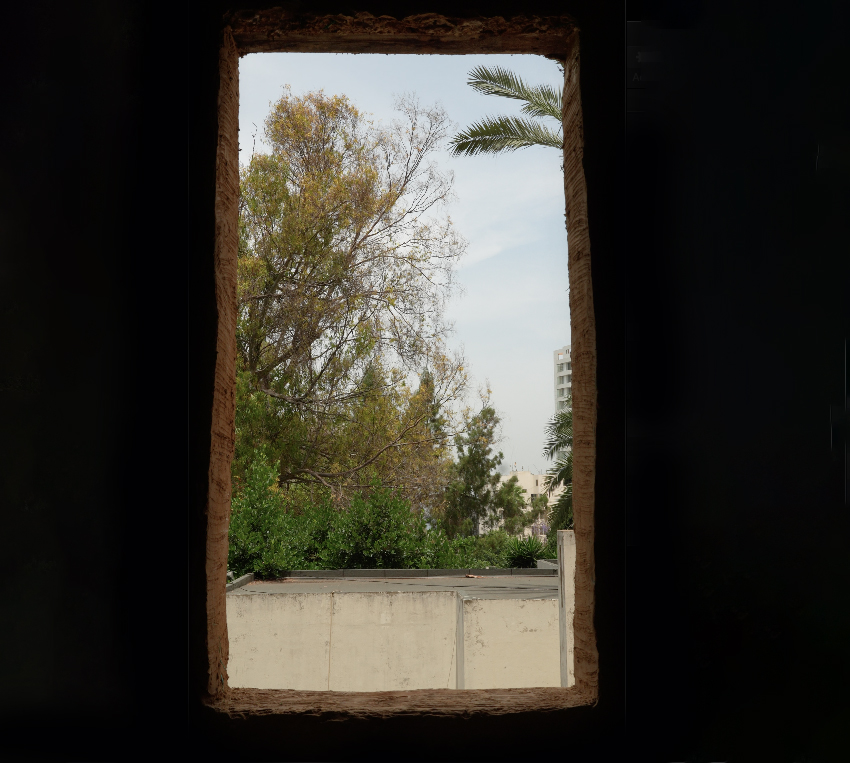
ENTANGLED MATTERS 2.0 is a public installation and exhibition developed around Villa des Palmes, a 19th-century building in Beirut damaged by the 2020 port explosion. Its façade was wrapped in a large hand-felted textile made from lightly felted wool.
The covering recalls the temporary fabrics and protective membranes used during architectural repair and rehabilitation, while the felt forms a skin over the damaged structure, drawing a relation between architectural and bodily processes of repair. Inside, the installation continued through wall-based textiles, inflated soft sculptures, and performance.
Realized with the support of the UNESCO BERYT Emergency Grant and the Robert A. Matta Foundation.
The covering recalls the temporary fabrics and protective membranes used during architectural repair and rehabilitation, while the felt forms a skin over the damaged structure, drawing a relation between architectural and bodily processes of repair. Inside, the installation continued through wall-based textiles, inflated soft sculptures, and performance.
Realized with the support of the UNESCO BERYT Emergency Grant and the Robert A. Matta Foundation.
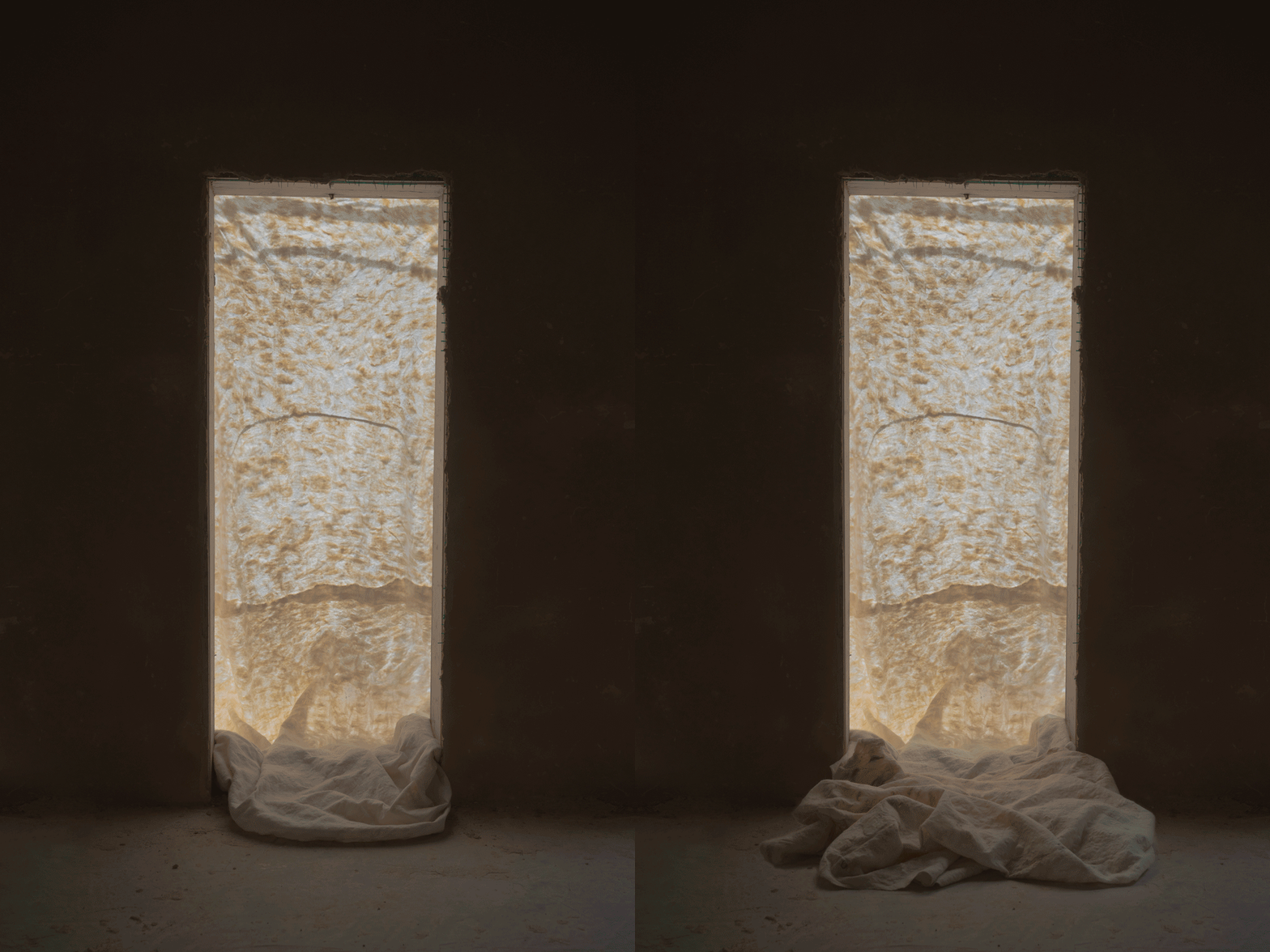






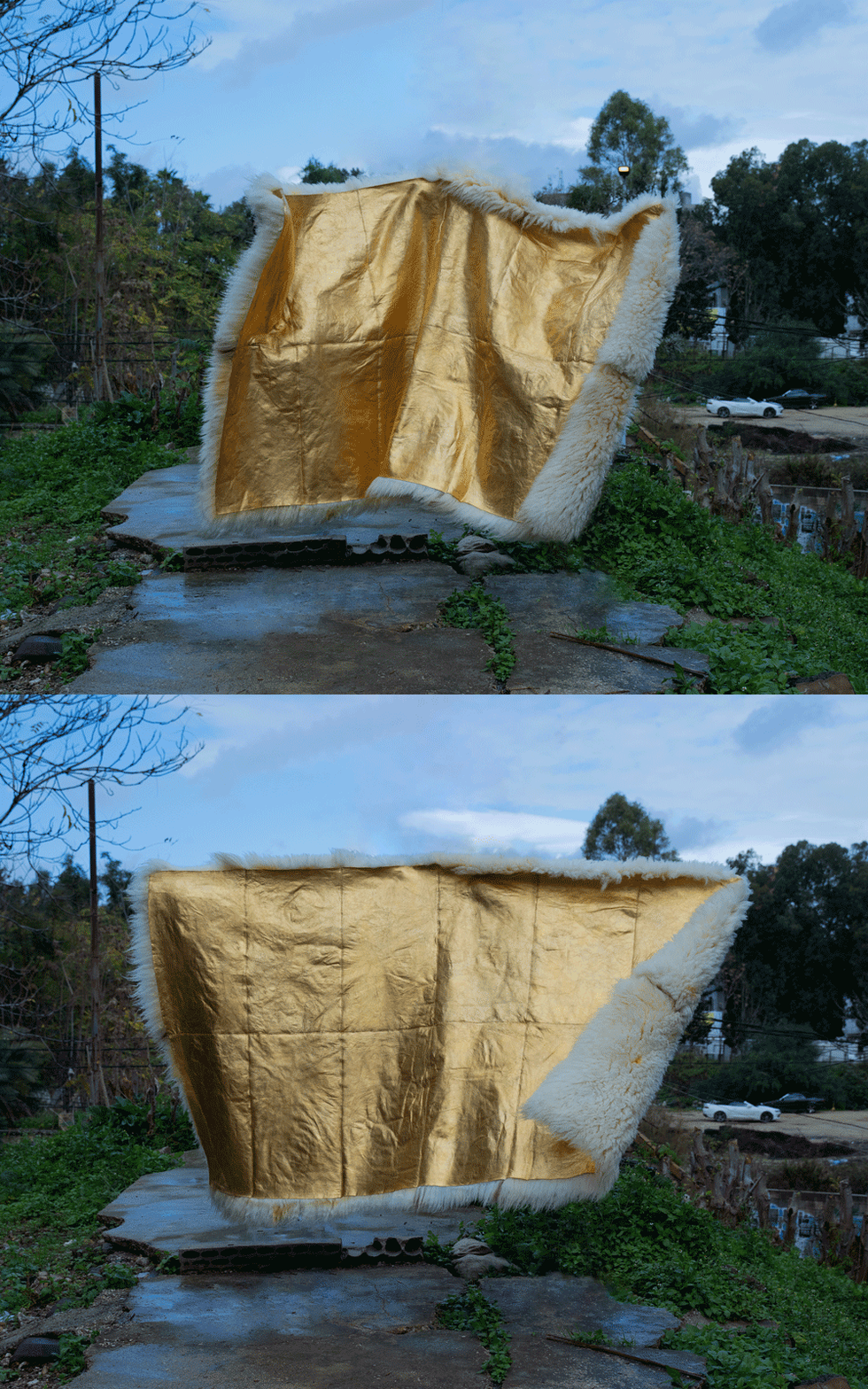
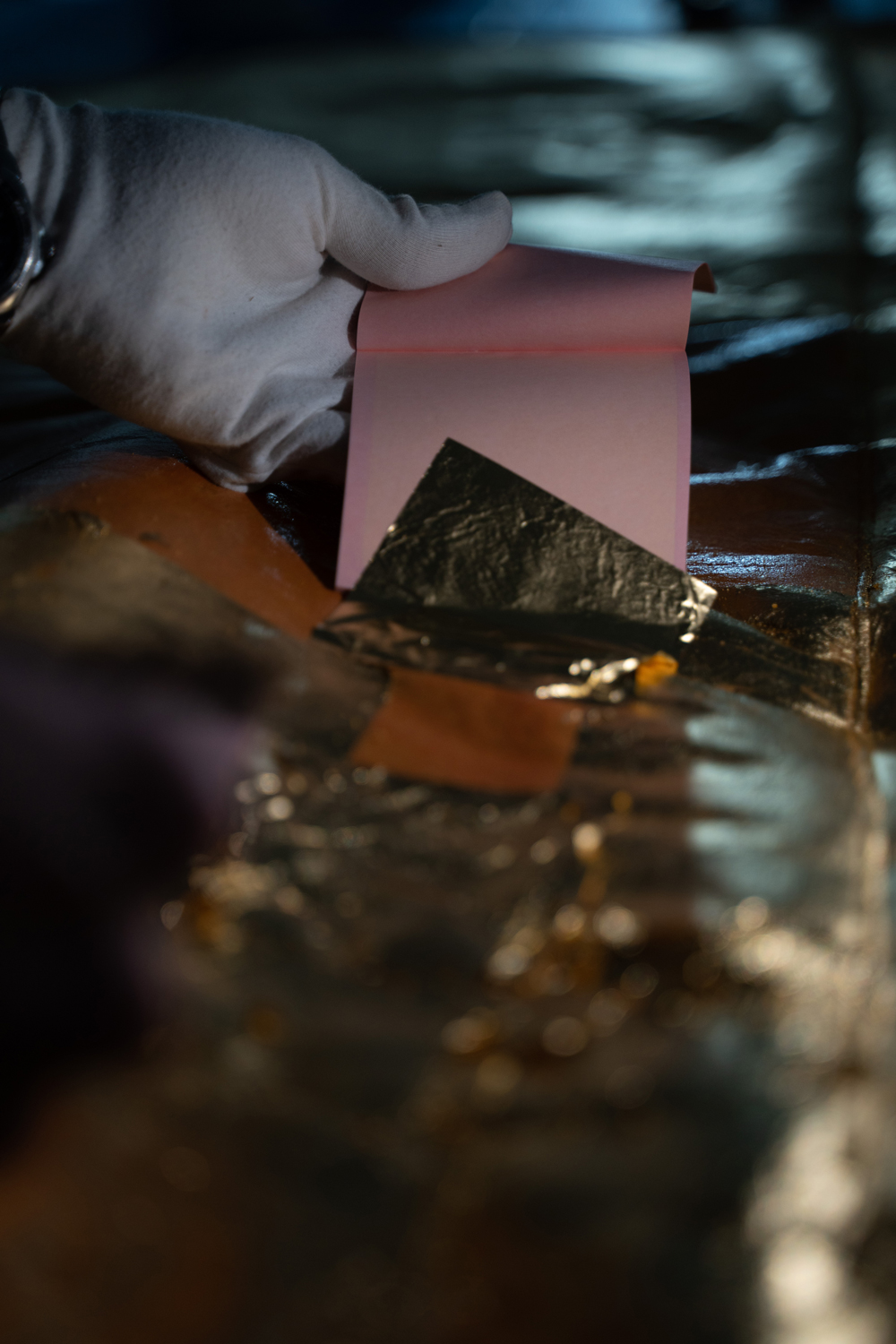
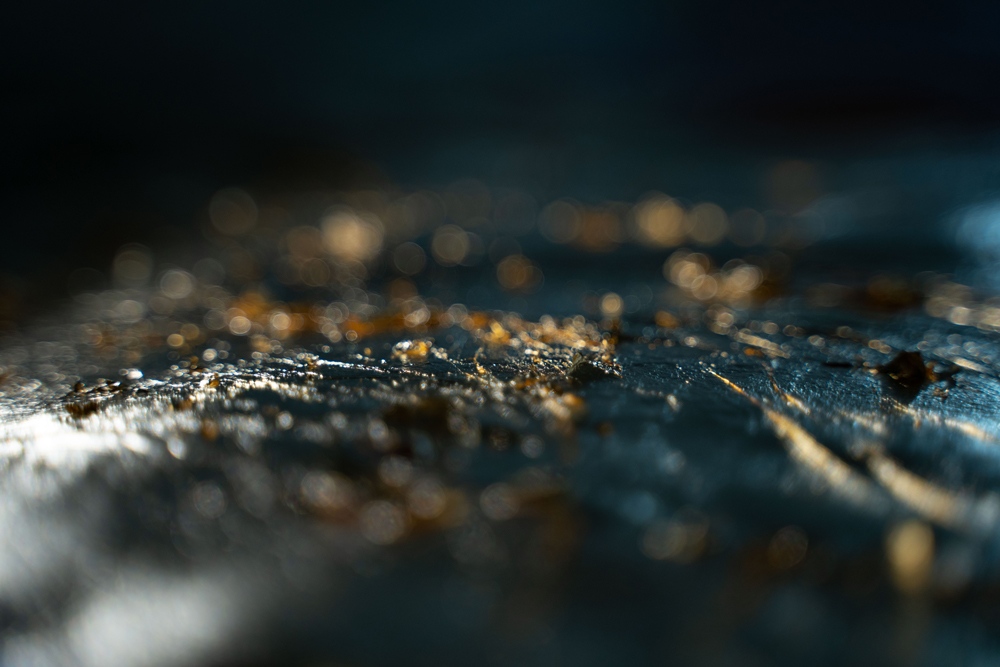
THE GILDED FLEECE is composed of twelve tanned Awassi sheep skins cut into rectilinear sections and joined through an industrial accordion stitch. The exposed flesh side is coated with refined rabbit collagen and covered with 24-karat gold leaf, applied using brushes made from horse and squirrel hair.
The work binds multiple animal bodies into a single surface. Sheep, rabbit, horse and squirrel are brought into direct material relation, their bodies appearing variously as skin, adhesive, tool and support. What reads at first as a unified field is therefore assembled through the remains of several species.
Its gold ground recalls illuminated manuscripts made on parchment, while its rectilinear scale and frontal presentation also evoke the blank billboard: a surface prepared for inscription, image, value or command. These references place the work between devotional image, manuscript surface and contemporary urban display.
The title draws from the myth of the Golden Fleece and its pursuit of an object invested with extraordinary value. Gold, associated with permanence, is fixed to skin, a material marked by decay, binding the corruptible to the incorruptible.
Commissioned by Qatar Museums for Design Doha, M7, Doha, Qatar, 2024. Collection of Qatar Museums.
Final image by Edmund Summer


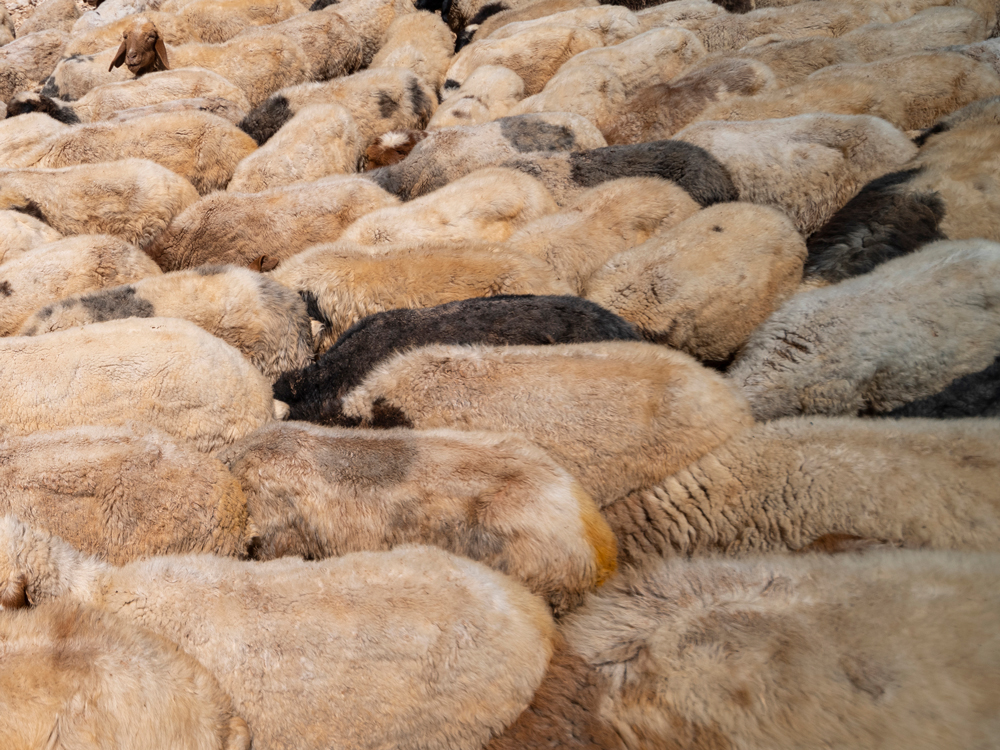


UTILITY OF BEING is
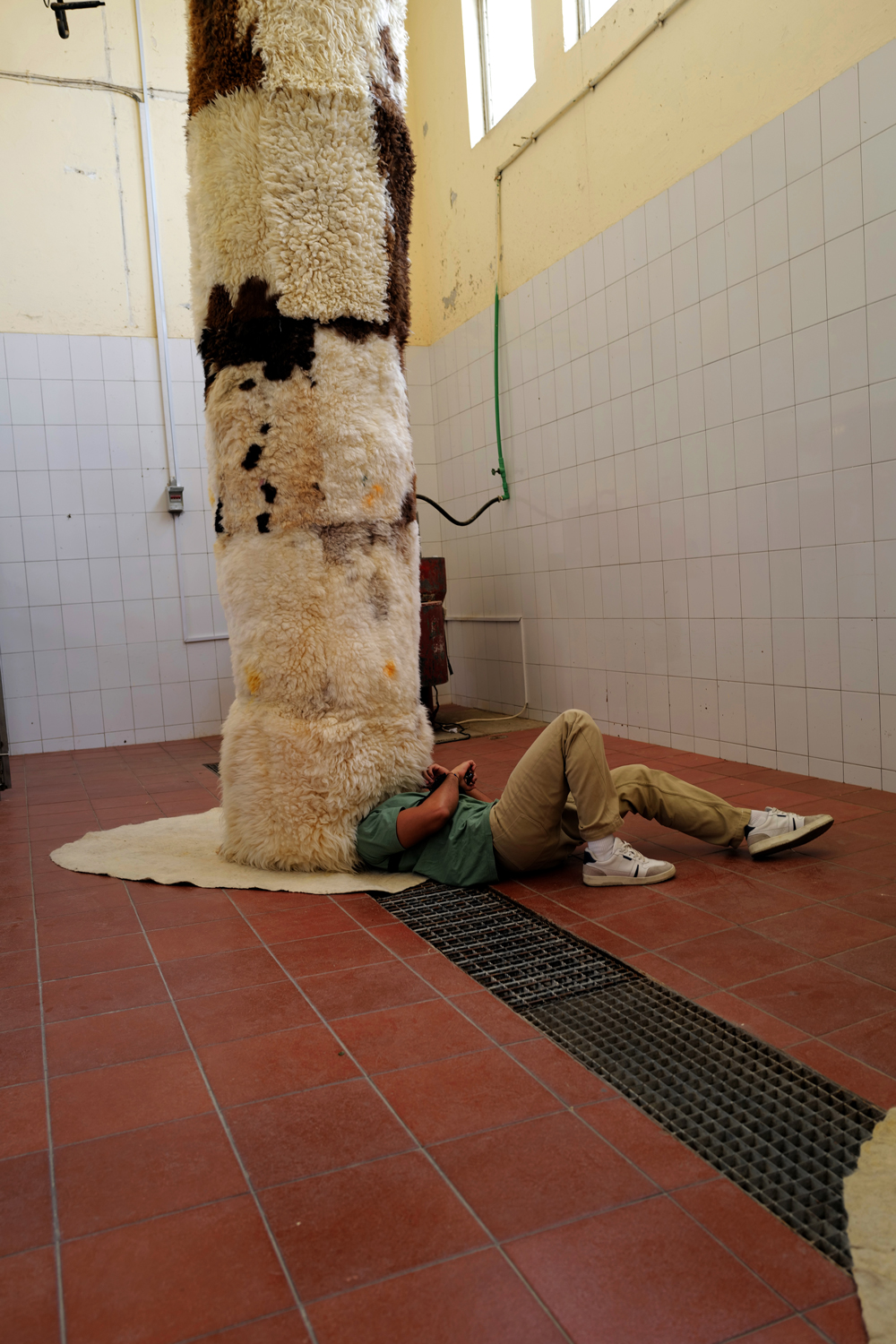
a site-specific installation conceived from the gathered pelts of the fat-tailed Awassi sheep—a natural byproduct of the slaughtering
process
in the region. Staged within the historic Old Slaughterhouse of the
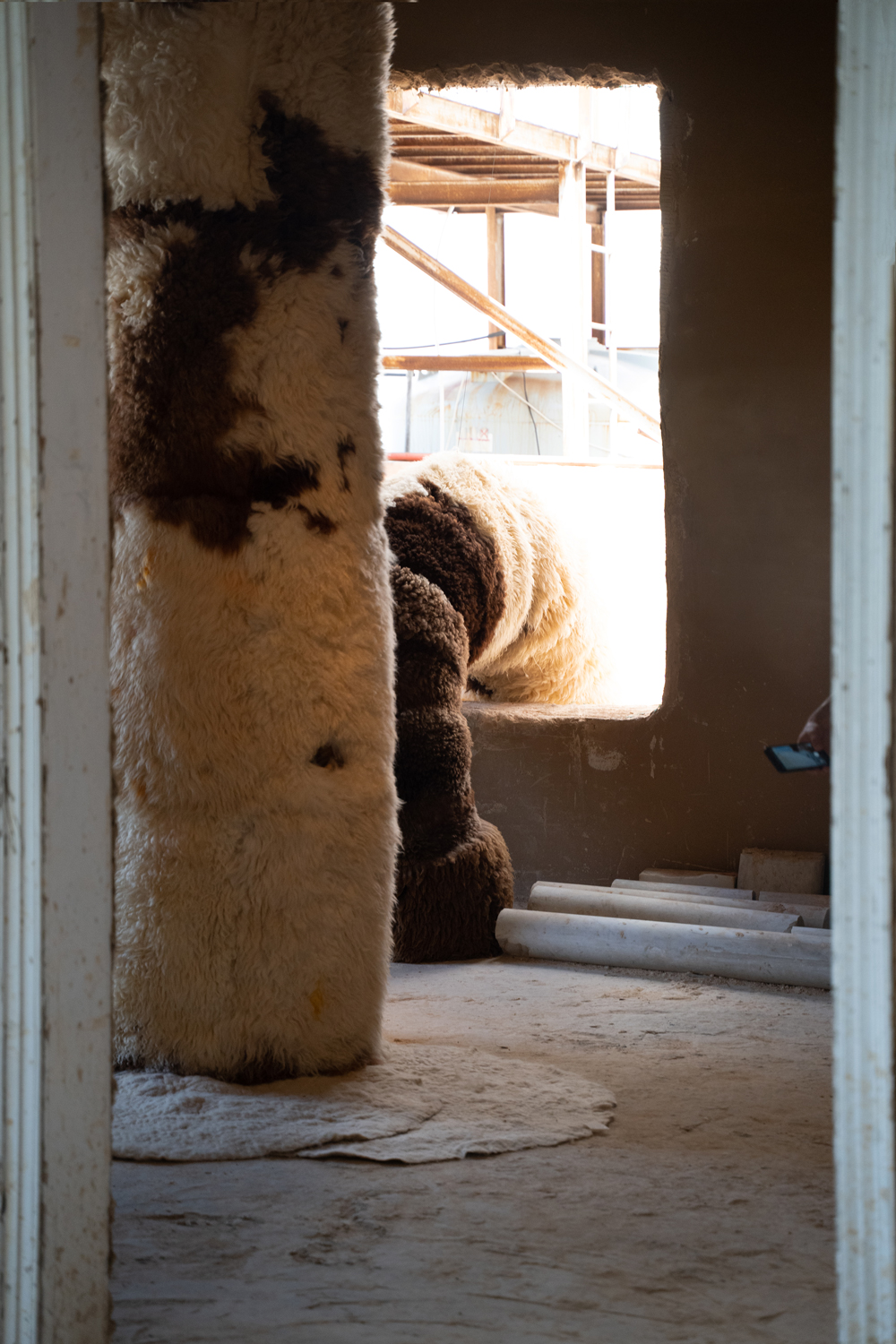
Emirate of Sharjah, the installation comprises of pneumatic tubular forms echoing the visceral lines of animal entrails. The continuously
inflated bodies penetrate and traverse the space while suspended from the hooks and rails originally used for handling animal carcasses. The work serves as a metaphor for
understanding the tension
that lies at the edge of survival and commerce,
challenging notions of human-animal relationality, the alchemy of material processes, and the fragility of
biological existence.
Images by Danko Stjepanovic coutersy of Sharjah Architecture Triennial, Alessandro Fagioli, and Omar Al Gurg
Disclaimer:
The animals whose skins are presented in this installation were not killed for the production of this work. The collected skins are stitched together and then inflated using internal air blowers; no plastic or PVC casing was used in the installation.
As a closure, we held a ceremonial bagpipe procession at the Old Slaughterhouse of Sharjah, commemorating the fat-tailed Awassi sheep. The bagpipe, or ḥabbān (هبان), traditionally crafted from a singular animal skin, becomes a lyrical vessel, carrying a rich history rooted in the region. A musical spell from the world of shepherds, the piper grants a voice to the animal while manipulating its aerated body.
Against the backdrop of the UTILITY OF BEING installation, featuring inflated forms made of sheepskins, a metaphor unfolds—an interplay of artifact and ritual—binding humans and animals in a dialectical interconnectedness.
Images by Danko Stjepanovic coutersy of Sharjah Architecture Triennial, Alessandro Fagioli, and Omar Al Gurg
Disclaimer:
The animals whose skins are presented in this installation were not killed for the production of this work. The collected skins are stitched together and then inflated using internal air blowers; no plastic or PVC casing was used in the installation.
As a closure, we held a ceremonial bagpipe procession at the Old Slaughterhouse of Sharjah, commemorating the fat-tailed Awassi sheep. The bagpipe, or ḥabbān (هبان), traditionally crafted from a singular animal skin, becomes a lyrical vessel, carrying a rich history rooted in the region. A musical spell from the world of shepherds, the piper grants a voice to the animal while manipulating its aerated body.
Against the backdrop of the UTILITY OF BEING installation, featuring inflated forms made of sheepskins, a metaphor unfolds—an interplay of artifact and ritual—binding humans and animals in a dialectical interconnectedness.






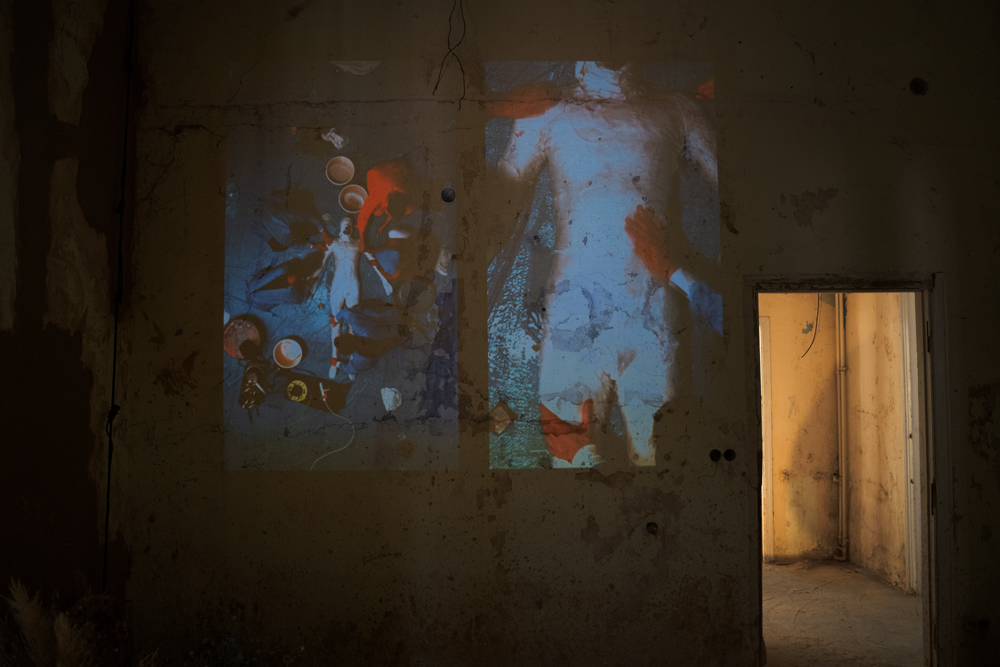
SHEDDING is a life-sized cast of the artist’s body made from felted sheep wool through a participatory process. The wool is laid directly onto the body, wetted, compressed, and felted by the hands of others until it forms a thin shell that can be removed and suspended as an effigy.
Drawing on funerary forms and processes of moulting, the work considers the body as a surface that can be impressed, shed, and remade. The human figure is formed through animal fiber, bringing human and animal bodies into direct material relation. The cast is displayed alongside a collection of natural and discarded remains gathered in Saudi Arabia, from snake skins to plastic bags, extending the idea of shedding across biological and synthetic matter.
Developed during INTERMIX Residency, Ministry of Culture of Saudi Arabia, Riyadh, Saudi Arabia, 2023
Curation by Tara Al Dugaither
Drawing on funerary forms and processes of moulting, the work considers the body as a surface that can be impressed, shed, and remade. The human figure is formed through animal fiber, bringing human and animal bodies into direct material relation. The cast is displayed alongside a collection of natural and discarded remains gathered in Saudi Arabia, from snake skins to plastic bags, extending the idea of shedding across biological and synthetic matter.
Developed during INTERMIX Residency, Ministry of Culture of Saudi Arabia, Riyadh, Saudi Arabia, 2023
Curation by Tara Al Dugaither